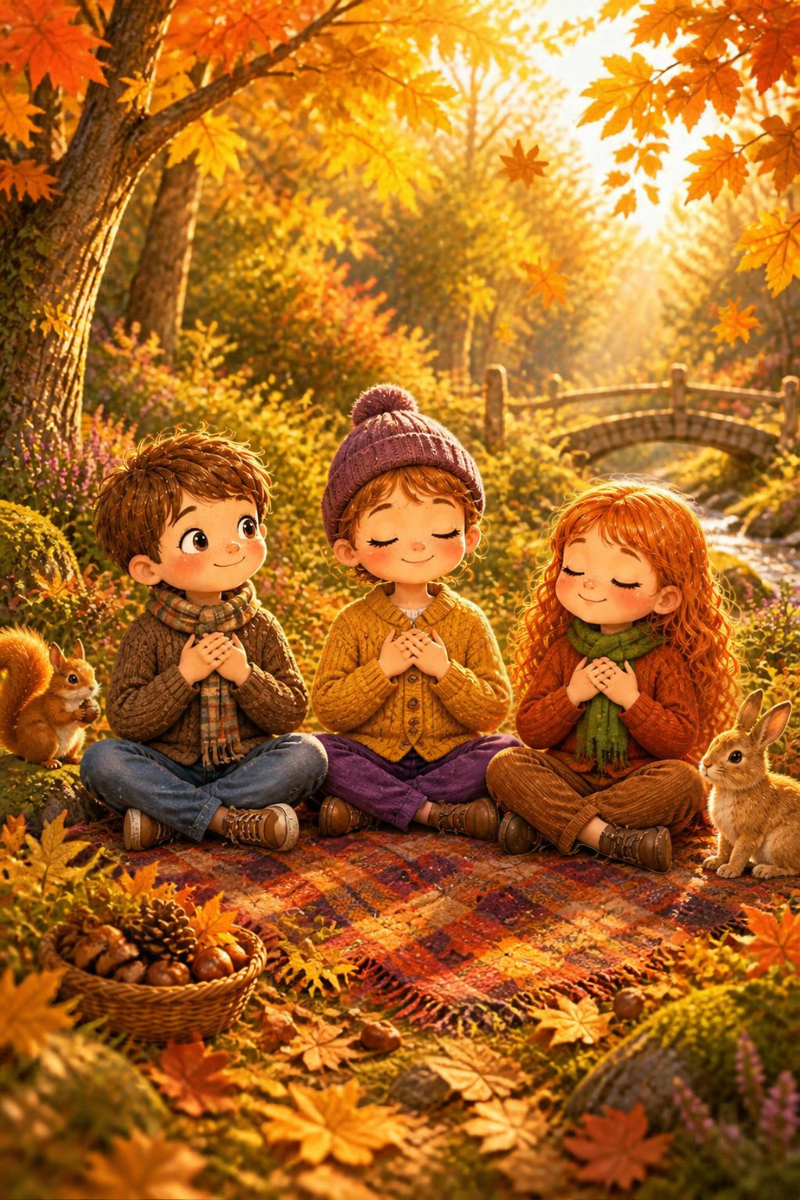
Autumn has a way of making us slow down a little,
The leaves begin to change colour, the mornings feel cooler, and there’s something lovely about heading outside to crunch through fallen leaves, collect conkers and spot acorns along the way. Then, after a little autumn adventure, there’s the comfort of coming home, getting cosy.
For children, this time of year is full of little things to explore, from woodland animals and colourful leaves to puddles, pumpkins and the changing world around them. But autumn also brings change, and while some children embrace it, others might need a little more time to settle into a new routine or adjust to the darker evenings and cooler days.
Just as the trees change throughout the season, our feelings can change too. Children might feel excited and full of energy one moment, then tired, unsettled or in need of a little comfort the next.
This is where mindfulness can be a lovely thing to introduce, not as something else children need to learn or get right, but as a gentle way to help them notice how they’re feeling and discover the little things that help them feel safe, supported and connected.
And the lovely thing is, mindfulness doesn’t have to mean sitting still, closing your eyes or following a set of instructions. Sometimes it’s simply noticing the colour of a leaf, listening to the wind in the trees or taking a quiet moment to enjoy being somewhere warm and cosy.
Autumn gives us so many opportunities to do just that.
Why Autumn Can Be a Lovely Time for Mindfulness
One of the things I love about autumn is how much there is to notice, especially when we take the time to look a little closer.
The trees look different, the air feels cooler and familiar places can suddenly seem completely new. For children, these little changes offer a wonderful opportunity to explore the world through their senses while beginning to understand their own feelings too.
You might notice how happy and excited your child feels when they’re jumping in crunchy leaves, but how much quieter and more relaxed they become when they’re back indoors, curled up with their favourite blanket
Both moments matter
Children need space to experience all sorts of feelings, whether that’s excitement, happiness, sadness, frustration or simply feeling a little overwhelmed. We don’t need to rush in and try to make every difficult feeling disappear; instead, we can help children recognise what they’re feeling and gently remind them that feelings change,
Just like the weather, we won’t feel the same way all the time, and that’s completely okay
Sometimes we need to run, jump and play, while other times we need a little quiet or someone to sit beside us and let us know we’re not alone.
A Little Autumn Breathing Game
A simple breathing game can be a lovely place to start practising mindfullness.
Imagine that you’re both autumn trees?
Find somewhere comfortable to stand, with your feet resting on the floor as though they’re the roots of your tree, and let your arms become the branches.
Take a gentle, comfortable breath in as you stretch your arms towards the sky, imagining your branches reaching up towards the clouds. As you breathe out, slowly relax your arms and picture a little autumn leaf floating down to the ground.
You could sway gently from side to side like a tree in the breeze, stretch up tall and then let your branches soften as the leaves begin to fall.
As you play, you might say:
“Let’s be autumn trees. Can you feel the wind moving your branches?”
“What happens when your leaves begin to fall?”
“Can you stand tall like a tree with your feet firmly on the ground?”
There’s no need to get the movements right or turn it into a structured activity. Your child might want to stretch, wiggle, sway or simply watch you instead.
It’s just a playful way to bring a little awareness to their bodies and enjoy a moment together without needing to rush on to the next thing.
Exploring Autumn With Our Senses
You don’t need to plan a special outing to enjoy a little mindfulness together. A walk around the garden, a visit to the local park or even looking out of the window on a rainy afternoon can offer plenty of opportunities to notice the world around you.
Next time you’re outside, try slowing down for a moment and exploring what you can see, hear, feel and smell
What can you see?
Perhaps golden leaves scattered across the ground, raindrops on a window, a squirrel gathering food or the beautiful colours of the tree.
What can you hear?
Listen for birds calling, the wind moving through the branches, footsteps crunching along a path or rain falling gently onto the ground
What can you feel?
Maybe it’s the cool autumn air on your cheeks, the softness of a favourite scarf or the warmth of your hands tucked inside your pockets
What can you smell?
You might notice the earthy smell of damp leaves outside or the comforting scent of a favourite meal cooking when you get home.
There’s no right or wrong answer, and children don’t need to notice everything. Some will happily tell you about every little thing they discover, while others might prefer to explore quietly in their own way.
You could also invite your child to choose one fallen leaf and spend a little time looking at it together. Notice its shape, the different colours and the tiny patterns running through it rather than rushing to collect lots of leaves and move on.
Sometimes, taking the time to really look at one small thing can make an ordinary walk feel a little more special.
When Feelings Change With the Season
Although autumn can be a lovely time of year, the changes it brings can sometimes leave children feeling tired, unsettled or a little more emotional than usual.
Darker evenings, cooler weather, busy school days and changes to familiar routines can all affect how children feel, although every child will respond differently.
Some might thrive on the excitement of a new season, while others may need more rest, reassurance or time to adjust.
Rather than expecting children to explain exactly what’s going on, we can gently make space for conversations about how they’re feeling
You might ask, “How has your day felt today?” or “Was there anything that made you smile?”
If something has felt difficult, you could try asking, “Was there anything that felt a little tricky?” or “What would help you feel more comfortable right now?”
Of course, children don’t always have the words to explain what’s happening inside them, and sometimes their answer might simply be, “I don’t know”
That’s okay too
They might find it easier to draw a picture, choose a colour to represent their feelings or point to a feeling rather than talk about it. We can give them time, listen without rushing to fix everything and let them know that it’s okay to ask for help.
Sometimes a child needs practical support, sometimes they need a change of activity, and sometimes they simply need to know that someone is listening.
The important thing is helping them understand that they don’t have to hide their feelings or manage everything on their own.
Finding Comfort in the Little Things
There’s something especially comforting about the simple pleasures of autumn, whether it’s pulling on warm socks after a walk, watching the rain from a cosy spot or spending a few minutes colouring together at the kitchen table.
These little moments might seem ordinary to us, but they can mean a great deal to children, especially when their day has felt busy or overwhelming.
You could make a little autumn comfort list together and talk about the things that help you feel relaxed, happy or supported.
Ask your child what helps them feel cosy, where they like to go when they need a quiet moment or who they can talk to when something feels difficult.
Their answers might be wonderfully simple. Perhaps they love cuddling up with a grown-up, playing with a favourite toy, listening to music or spending time with a much-loved pet
You could even add these ideas to a drawing or make a little list to keep somewhere handy for days when your child needs some extra comfort.
It’s not about avoiding difficult feelings or trying to make every day a happy one. It’s about helping children recognise the people, places and little activities they can turn to when they need some support.
An Autumn Gratitude Moment
Autumn is full of little things that can easily pass us by when we’re busy getting through the day, so taking a moment to notice something we’ve enjoyed can be a lovely habit to share with children.
This doesn’t need to become a big conversation about gratitude or another activity to fit into an already busy routine.
You could simply ask your child to think of one little thing they enjoyed that day
Maybe they found a beautiful leaf, played with a friend, spotted a bird in the garden or enjoyed coming home to a warm drink after being outside
You can share your own answer too, perhaps telling your child, “One little thing I enjoyed today was walking with you and listening to the leaves crunch beneath our feet”
It’s a lovely way to show children that happiness doesn’t always come from big occasions or exciting experiences. Sometimes it’s found in the smallest moments, especially when we take the time to notice them
It’s also important to remember that children don’t need to find something positive when they’re having a difficult day. If they’re feeling sad, worried or upset, those feelings deserve space too
This is simply an invitation to notice something lovely when they’re ready.
My Autumn Mindfulness and Wellbeing Activity
If you’re looking for a simple activity to enjoy together at home, I’ve created a My Autumn Mindfulness and Wellbeing Sheet to help children explore their feelings through colouring, drawing and gentle reflection.
With autumn-inspired pictures to colour and decorate, including leaves, acorns, pumpkins, woodland animals and a beautiful tree, the sheet gives children a little space to slow down and get creative while thinking about the world around them
Alongside the pictures are a few simple prompts to help start conversations about feelings, everyday experiences and the little things that bring comfort
Children can explore questions such as:
- Today I feel… Happy, calm, excited, worried, tired or a little bit of everything
- Something beautiful I noticed today was…
- One sound I heard was…
- Something that helps me feel cosy is…
- When I need a little help, I can talk to…
- One little thing that made me smile was…
There’s no pressure to answer every question or complete the whole sheet in one sitting. Younger children might prefer to draw pictures or talk about their answers while a grown-up writes them down, whereas older children may enjoy filling in the prompts independently.
You can also sit alongside your child and complete the activity together, sharing your own thoughts and answers as you go. Sometimes, when children see us talking openly about our feelings, it helps them feel more comfortable sharing theirs.
Most importantly, there’s no right or wrong way to use the sheet. It isn’t about creating a perfect picture or encouraging children to feel a certain way; it’s simply an opportunity to enjoy a little creativity, reflection and connection.
You can download your free My Autumn Mindfulness and Wellbeing Activity Sheet and enjoy a gentle moment of creativity together this autumn https://mailchi.mp/charliella-rose.com/autumn-mindfulness-and-wellbeing-worksheet
Making Mindfulness Part of Everyday Autumn
Mindfulness doesn’t need to be another thing to squeeze into an already busy day. Often, it’s the little moments that happen naturally that make the biggest difference.
It might be noticing the changing colours of the leaves on the way to school, listening to the rain while sitting somewhere cosy or taking a few minutes to colour together after a busy day.
You could enjoy a quiet story before bedtime, choose a special leaf to look at closely or simply ask your child to share one little thing that made them smile.
Some days, these moments will happen naturally, while other days everyone might feel tired, rushed or in need of a little extra patience.
And that’s perfectly okay
Wellbeing isn’t about getting everything right or creating a calm, happy atmosphere all the time. It’s about finding small, realistic ways to care for ourselves and each other, even when life feels a little messy.
Final Thoughts
Autumn reminds us that change is a natural part of life. The leaves change colour, the days grow shorter and the world around us slowly settles into a new season
Children experience changes in their own ways too, feeling excited one day, worried the next or somewhere in between. They don’t need to understand every feeling straight away, and they certainly don’t need to have everything figured out.
What they need are opportunities to play, explore, ask questions, take breaks and feel supported by the people around them.
Sometimes, the loveliest wellbeing moments are also the simplest ones: a walk through crunchy leaves, a favourite story on a rainy afternoon or a quiet conversation about something that made us smile.
So, this autumn, perhaps we can all give ourselves permission to slow down a little, notice the colours around us, listen to the wind and enjoy the warmth of a cosy jumper after time spent outdoors.
Because wellbeing isn’t about feeling happy or calm all the time. It’s about learning to recognise how we feel, understanding that our feelings matter and knowing that we don’t have to navigate them alone.
And sometimes, all it takes is a little pause among the falling leaves.